

Views: 0 Author: Site Editor Publish Time: 2026-02-25 Origin: Site


PCB manufacturing bosses—do these problems sound familiar?
After drilling, resin debris remains in the holes.
Before SMT, fine dust particles cling to the board surface.
After soldering, welding slag splashes across circuits.
These seemingly insignificant particles can cause serious issues. At best, they lead to cold solder joints or short circuits. At worst, entire batches are scrapped, rework rates surge, and delivery schedules are delayed.
In reality, solving PCB dust removal problems comes down to choosing the right core equipment. Thanks to their high efficiency, precision, and non-contact operation, side channel blowers have become an essential dust removal solution in the PCB industry.
PCB production involves multiple complex processes—drilling, etching, SMT, and soldering—each of which generates dust, debris, or residual contaminants. These contaminants share three characteristics: extremely fine particles, strong adhesion, and scattered distribution. Conventional cleaning methods simply can’t cope.
Manual wiping is inefficient, leaves fiber residues, and may scratch PCB surfaces.
Standard fans disperse airflow and can only remove loose surface dust, leaving debris trapped in holes and gaps.
Vacuum cleaners often lack sufficient suction and may generate static electricity, risking damage to sensitive circuits.
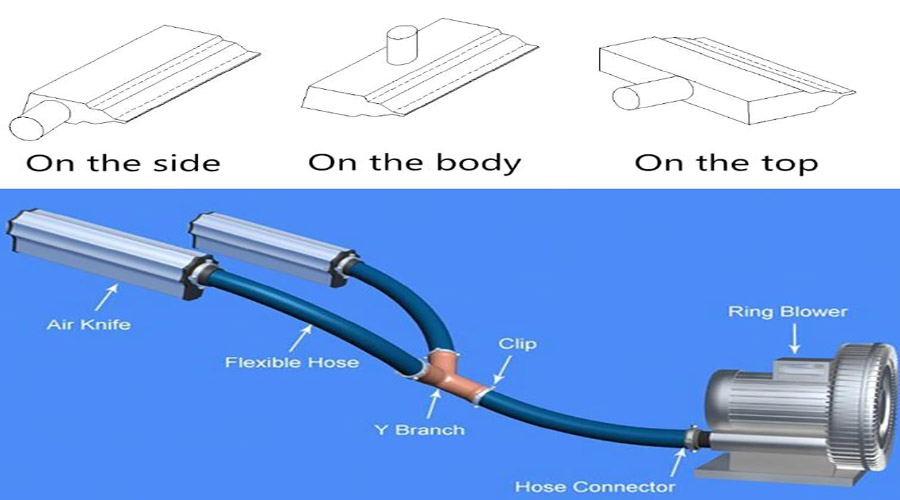
The core strength of a side channel blower lies in its controlled high-velocity airflow combined with stable negative pressure. Using air knives to generate uniform, high-speed air streams—paired with negative-pressure suction—side channel blowers can precisely remove surface dust and extract debris from deep gaps. Adjustable airflow speed and direction ensure thorough cleaning without damaging the PCB, fully meeting the industry’s high precision requirements.
Different production stages demand different dust removal solutions. Side channel blowers adapt seamlessly, especially in these three critical scenarios.
Drilling and edge routing generate large amounts of resin debris and copper dust. These particles easily lodge in vias and board edges, leading to poor conductivity during plating or soldering.
A side channel blower system combines air knife blowing and negative-pressure suction. High-speed airflow is precisely directed at holes and edges to dislodge debris, while the suction system immediately captures the particles into a dust collection unit—ensuring clean vias and smooth downstream processing.
Fine dust on PCB surfaces before SMT can cause poor contact between components and pads, resulting in cold solder joints or detachment. Soldering processes may also leave behind welding slag that affects circuit continuity.
Side channel blowers equipped with anti-static air nozzles deliver clean, oil-free airflow that removes dust and solder residues while neutralizing static electricity. Adjustable airflow ensures precision cleaning without disturbing delicate components, significantly improving SMT and soldering yield rates.
After washing, residual moisture may remain on PCB surfaces. Even after drying, condensation or airborne dust can still accumulate.
Side channel blowers with heated air knife systems can rapidly remove moisture while performing secondary dust removal. With airflow temperatures controlled between forty and sixty degrees Celsius, they ensure thorough drying without harming components or coatings, delivering consistently clean PCB surfaces.
Why are more PCB manufacturers replacing traditional dust removal equipment with side channel blowers? These three advantages explain the shift.
Side channel blowers integrate seamlessly with automated PCB production lines, enabling continuous operation without downtime. Compared to manual cleaning, dust removal efficiency increases several times over, fully supporting high-volume manufacturing.
With controllable and uniform airflow, side channel blowers do not scratch PCB surfaces, damage components, or deform boards. Anti-static designs further protect sensitive circuits, significantly reducing defect and scrap rates.
High-efficiency motors consume less energy under the same operating conditions. Oil-free operation minimizes maintenance, extends service life, and eliminates frequent part replacement—resulting in substantial long-term cost savings.
For the PCB industry, "cleanliness" directly determines product quality and market competitiveness. If your production line is still troubled by incomplete dust removal, low efficiency, and high scrap rates, you might as well try a high-pressure blower - it is not only a simple dust removal device but also a "quality guarantee" for the production line.
